Why $5 co-op horror keeps going viral
Price, group size and clip-ability form a repeatable formula. We charted it across every breakout of the last three years.

Look at the last three years of surprise multiplayer hits and a pattern falls out almost immediately: cheap, group-sized, scary, funny. Phasmophobia, DEVOUR, Escape the Backrooms, R.E.P.O. — different games, same economic shape. This is not a coincidence; it's a formula, and it's worth taking apart.
The $20 group threshold
The unit that buys a co-op game is not a player — it's a friend group. A $4.99 game costs a four-person group about twenty dollars total, which is impulse-purchase territory for an evening's entertainment. Compare that to a $40 title, where equipping the same group costs more than a night out and requires an actual group decision.

In our data, the correlation is blunt: among co-op games that entered the Breaking Out band in the last three years, four out of five cost less than $15. The price isn't a detail of these breakouts. It's a precondition.
Horror is the clip factory
Why horror specifically? Because fear plus friends equals the most shareable footage in gaming. A jump scare alone is a genre cliché; a jump scare that makes your friend throw their headset is a thirty-second clip with a built-in punchline. The genre automates comedy timing.
Nobody clips the moment they were scared. Everybody clips the moment their friend was.
This is also why these games spread after purchase: the clip shows the reaction, the reaction sells the game, and every new group manufactures more clips. The loop feeds itself for as long as the game keeps producing novel scares.
The formula, stated plainly
- Price under $15, so a whole group can buy in on impulse.
- Group size of exactly 4 — big enough for chaos, small enough for one voice channel.
- Asymmetric fear — someone is always watching someone else panic.
- Round length under 30 minutes, so "one more run" always wins.
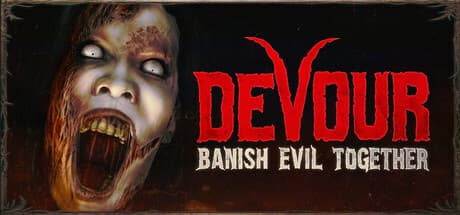
DEVOUR
None of this guarantees a breakout — thousands of cheap horror co-ops stay obscure. But when one of them does catch a spark, this structure is what turns a spark into 600% growth. The radar's job is spotting the spark; the formula explains the fire.
Игры из статьи
Продолжить искать
Читайте дальше
 Data
DataWhat a viral TikTok really does to a game
We traced the 72 hours after a clip blows up: the spike, the decay and the one number that predicts what remains.
 Hype Radar
5 games Hype Radar spotted before the crowd
A look back at the games our radar flagged in the last month — days before their growth became obvious.
Hype RadarEscape the Backrooms: a Hype Score jump from 64 to 83
A quiet co-op horror crossed into our Breaking Out band this week. Here is the anatomy of the signal.
 Hype Radar
Why R.E.P.O. grew 624% in one week
Player counts, review velocity and the early signals Hype Radar caught days before the spike went vertical.
Хотите видеть сигналы раньше остальных?
Данные из этой статьи — прямо из Hype Radar: живые, ранжированные, со скорингом.
Открыть Hype Radar